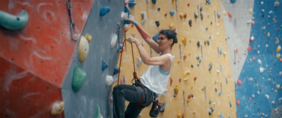
Sport not only builds the figure, opens the mind and strengthens the spirit. For Siwa, a fan of camping and climbing, it is also a form of therapy that helps her maintain her life balance, health and strength to tackle multiple sclerosis (MS). Siwa's secret lies in neuroplasticity of the brain driven by muscle strength.
Poles are becoming more and more physically active – according to the MultiSport Index 2019 survey, 19% of them exercise five times a week. 43% use exercise to stay healthy, reducing the risk of having a heart attack or type 2 diabetes, 27% train for pleasure and relaxation, and 14% to improve their body shape. Physical activity is also extremely important for one of the key organs – the brain. Contrary to appearances, it is not logical games, but physical exercises that strengthen the brain and stimulate its neuroplasticity, i.e. the ability to produce new cells and nerve connections to the greatest extent.
“It may surprise you, but the brain is the organ that is most enhanced by your physical activity. […] Studies on neuroplasticity have shown that not many things are equally effective in making the brain susceptible to change – that is, plastic – as physical activity. It turned out that we do not have to be in motion especially long. In fact 20-30 minutes a day is enough and such a dose will affect neuroplasticity” – writes psychiatrist Anders Hansen in his latest book “The Real Happy Pill: Power Up Your Brain by Moving Your Body”.
Exercise reduces the activity of one of the amino acids – GABA, which is responsible for the processes that slow down changes in the brain. Therefore, when we train, the nerve centre becomes more susceptible to reorganisation and resembles the brain of a child who is just learning about the world. Exercise also improves the brain’s cognitive abilities, enhancing concentration, memory and creativity. Regular exercise improves mood and stress resistance.
The brain is the most important muscle in climbing
This is what Wolfgang Güllich, a German climber, believed in. He probably did not mean brain neuroplasticity but analysing the climbing route or overcoming his own fears. Today, however, it turns out that his statement is capacious enough to cover this process as well. Anna-Maria Siwińska, a traveller and climbing fan who suffers from multiple sclerosis, has found out about it the hard way. Multiple sclerosis is an autoimmune disease in which antibodies responsible for the immunity of the human body want to destroy not only bacteria or viruses but also the human nervous system. The most common form of the disease is relapsing and remitting. It is characterised by so-called relapses, i.e. moments of exacerbation of the disease, when the body motoric, senses or cognitive abilities are dysfunctional, which disappear or soften after some time.
– My adventure with climbing began with hiking in the mountains, when I was a teenager and lasted until college. After 20 years I came back to the wall with my growing son and my bag of experiences related to the disease. At first, I was only supposed to belay my son – remembers Anna-Maria Siwińska.
The path of small successes
Relapses of the disease left their mark in the form of paraesthesia, paresis of the hand and problems with balance. Siwa was slowly coming back to fitness during Pilates classes, because strenuous training and overheating of the body are not conducive to multiple sclerosis. Her first success after the diagnosis was a bike ride – 3 km of pride.
– At that time, I was going to the wall and belayed my son. After some time, together with my doctor I noticed that the nervous tension in my right hand was starting to disappear. I understood that it was the effect of attaching a rope to a hook and hand training, thanks to which my neurons found a different path for a pulse flow. Since then, aside from pharmacological treatment I have been treating exercise as one of the pillars of multiple sclerosis therapy – says Siwa – My son started urging me to climb on artificial walls. He told me I could do it for such a long time that I believed it myself. The beginnings were difficult. I couldn't climb the simplest path. Fortunately, over time, the muscles remembered how it works. And I regained my balance.
Anna-Maria Siwińska is one of the three heroes of the “What Moves You” campaign who share their experiences connected with physical activity and its meaning in their lives. You can watch the video with Siwa here.
*This information does not constitute medical advice. For any illness, before undertaking physical activity you should consult your physician.
